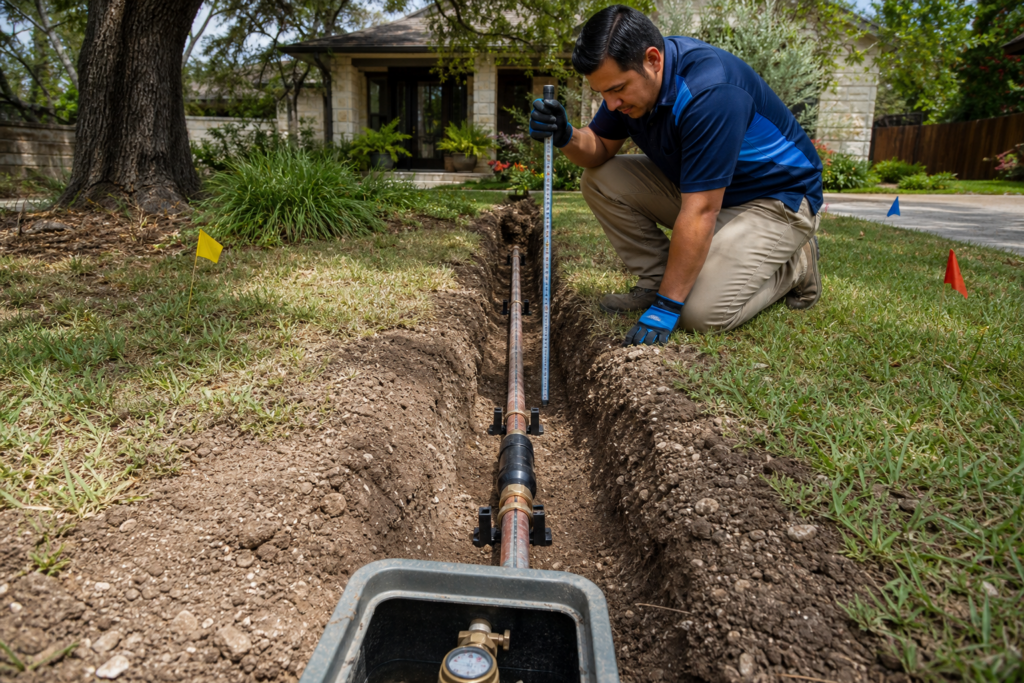


Replacing a main water line may require access through part of your yard, but it does not automatically mean the entire lawn will be excavated. The work area depends on the line’s actual route and depth, the soil and rock around it, nearby utilities and roots, access for equipment, the condition of the existing pipe, and the replacement method that is appropriate for the property.
A plumber needs to evaluate those conditions before describing how much ground may be disturbed. A responsible proposal should show where access is expected, explain which surfaces may be affected, and separate the plumbing work from any landscaping, irrigation, concrete, or specialty restoration that is outside the scope.
Why the Water Line Route Matters
The main water service line generally runs from the water supply connection toward the home, but its exact path is not always obvious from the surface. Previous repairs, additions, landscaping, fences, driveways, and changes around the property can make the route less predictable.
Before work is planned, the plumber may need to review visible entry points, meter location, property conditions, service history, and available records. Utility locating or other condition-led investigation may also be needed. That information helps define where access is practical and where conflicts could change the plan.
A straight, open route through soil presents a different project from a line that passes near mature trees, irrigation, retaining walls, walkways, or other buried services. The evaluation is important because a proposal based only on the distance between the meter and the house may miss the conditions that actually control the work area.
What Can Increase Yard Disturbance?
Several property-specific factors can make a water line replacement more involved.
Line Depth and Soil Conditions
A deeper line requires more controlled access than a shallow one. Austin-area properties can also have varying combinations of soil, rock, fill, and roots. The ground conditions visible in one part of a yard may not represent the entire route.
Rock or compacted material can affect how access is created. Loose or unstable soil can affect how an excavation is supported and closed. These conditions should be evaluated at the property rather than assumed from the neighborhood.
Trees, Roots, and Established Landscaping
A mature tree, large root zone, garden bed, or valuable planting may influence the route and access plan. That does not establish that a particular tree or planting must be removed. It means the plumber needs to identify the conflict and explain the practical options.
Do not cut roots, move utility markers, or start exposing the pipe yourself. Unplanned digging can damage the water line, irrigation, communications, electric, gas, or other buried components.
Irrigation and Other Buried Utilities
Sprinkler piping, low-voltage landscape lines, and other buried services can cross the proposed work area. Public utility locating does not necessarily identify every privately installed component on a property. Ask what locating is included, whether private systems need separate marking, and how an unexpected crossing would be handled.
Concrete, Walkways, and Other Hardscape
A route beneath a sidewalk, patio, driveway edge, or other finished surface requires different planning from open lawn. Ask whether the expected access crosses hardscape and whether removal, patching, replacement, or a separate trade would be needed.
The existence of hardscape does not by itself determine the replacement method. The plumber still needs to account for line condition, route, depth, access, local requirements, and the suitability of the available options.
Pipe Condition and Previous Repairs
A known failure point may not show the condition of the whole service line. Prior repair locations, deteriorated material, repeated leaks, offsets, or an uncertain route can change how much of the line must be accessed.
If the source or route is unclear, professional water leak detection may be useful before a replacement plan is finalized. Diagnostic work should narrow uncertainty; it should not be treated as a promise that the repair will avoid excavation.
Does Every Replacement Require One Open Trench?
No single access method fits every home. Some projects use controlled open excavation along part or all of the route. Other projects may use different access points or installation methods when the pipe, route, soil, entry conditions, equipment access, and local requirements allow it.
A homeowner should not assume that a line qualifies for a trenchless or no-dig option based on an advertisement or a neighboring property. Those terms can also describe different processes and different restoration needs. Ask the plumber which method is proposed for your property, why it is suitable, where access points will be, and what conditions could force the plan to change.
The most useful comparison is not “digging versus no digging” in the abstract. It is a written comparison of the actual route, pipe, access points, surfaces, testing, cleanup, exclusions, and contingencies for your home.
What Usually Happens Before the Ground Is Opened?
A well-defined scope should come before excavation. Depending on the property and project, preparation may include:
- Confirming the expected line route and connection points
- Reviewing visible site conditions and access
- Identifying known utilities and private systems that may cross the work area
- Marking or protecting the planned work zone
- Discussing trees, irrigation, fences, hardscape, and stored items near the route
- Confirming when water may need to be shut off
- Clarifying permits, inspection, or utility coordination where required
- Defining who is responsible for backfill, cleanup, landscaping, irrigation, concrete, and other restoration
The exact sequence depends on the job. The key is that the homeowner receives a clear plan before the yard is disturbed, including what is known, what remains uncertain, and how a changed condition will be documented.
How Long Will the Water Be Off?
A main water line project can require a temporary shutoff while connections are made, tested, or inspected. The length and timing depend on the scope, site conditions, required coordination, and what the crew finds after access is created.
Ask when the shutoff is expected, what must happen before service can return, and how you will be notified if the schedule changes. Do not operate an unfamiliar meter or curbside valve unless the serving utility or qualified professional specifically directs you to do so.
If you currently have unexplained pressure changes, wet areas, or a rising water bill, review the signs of a hidden water leak and request professional evaluation. Those signs can justify diagnosis, but they do not establish that replacement is necessary.
What Happens After the New Line Is Installed?
The plumbing scope should state how the installed line will be checked before the work area is closed. Testing, inspection, documentation, and connection requirements vary with the project and jurisdiction. Ask what applies to your address and who coordinates each step.
Backfill and surface restoration are separate details that deserve precise language. “Backfilled” may not mean sod, plants, irrigation, decorative stone, concrete, or other finishes will be returned to their prior condition. Likewise, “cleanup included” may refer only to construction debris and basic site cleanup.
Before approving the work, ask the proposal to identify:
- How excavated material will be handled
- Whether soil will be compacted or settled in stages
- What lawn or planting work is included
- Whether irrigation repairs are included or excluded
- Whether concrete, pavers, fencing, or retaining features are affected
- Whether another contractor or trade may be needed
- What happens if an undocumented utility or obstruction is found
- How pre-existing site conditions will be recorded
Clear scope language prevents a plumbing completion and a landscaping expectation from being mistaken for the same promise.
Questions to Ask Before Authorizing Water Line Replacement
A useful proposal should let you answer these questions:
- What condition supports replacing the line rather than completing a narrower repair?
- What is the expected route from the supply connection to the house?
- Which areas of lawn, planting, irrigation, or hardscape are expected to be affected?
- What replacement and access method is proposed, and why is it appropriate here?
- Where will excavation or access points be located?
- What utility or private-line locating is included?
- When is the water expected to be shut off, and what must happen before service returns?
- What testing, permit, inspection, or utility coordination applies?
- What backfill, cleanup, and restoration work is included?
- Which restoration items are specifically excluded?
- What conditions could change the route, method, price, or work area?
- How will an unexpected condition and revised scope be explained and approved?
Avoid relying on a verbal assurance that the yard will “look the same” unless the written scope defines what that means. A realistic plan distinguishes plumbing completion from grass, planting, irrigation, and hardscape restoration.
How Homeowners Can Prepare Safely
Once the work area has been identified, follow the plumber’s instructions for ordinary access. Move portable furniture, toys, decorations, or stored items only from safe, above-ground areas. Keep children and pets away from markings, equipment, and the work zone.
Photograph visible landscaping, irrigation heads, walkways, fencing, and other features near the proposed route before work begins. Confirm the best way to reach you if an unexpected condition is found. Plan for the communicated water shutoff window without trying to expose, disconnect, reroute, or repair the service line yourself.
Do not enter an excavation or place objects inside it. Do not remove protective barriers or disturb an exposed line. If you notice water movement, unstable soil, or another unexpected condition, stay clear and notify the crew.
Plan the Water Line Scope Before the Yard Is Opened
The best way to reduce uncertainty is to define the route, access, plumbing work, shutdown expectations, and restoration boundaries before excavation begins. Abundant Plumbing provides water line repair and replacement in Austin and can evaluate the property conditions that shape a practical work plan.
Call (512) 201-9978 or request service online to discuss the condition you have noticed and arrange a professional water-line assessment.