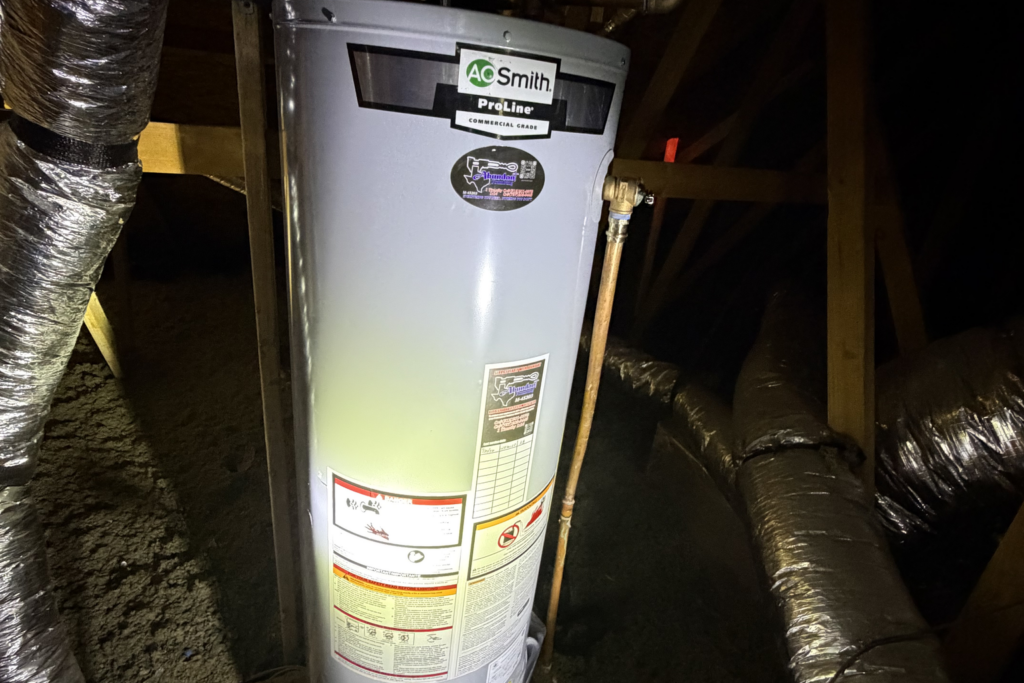


Popping or rumbling from a tank-style water heater can be consistent with sediment or mineral scale collecting near the bottom of the tank. As the burner or heating element heats the water, small pockets of water around those deposits may create the sound. However, noise alone cannot confirm the cause. Pipe movement, normal heating-cycle sounds, a loose component, or another condition can sound similar, so a professional inspection is the safest way to understand what is happening.
A brief sound that has always been present may not carry the same concern as a new noise that is getting louder, lasting longer, or arriving with poor hot-water performance. Pay attention to when the sound starts, how long it lasts, and whether anything else has changed. Those details can help a plumber evaluate the unit without requiring you to open or adjust it.
How Sediment or Scale Can Create Popping Sounds
Small amounts of material can settle in the bottom of a storage tank over time. Mineral deposits may also form on surfaces exposed to heated water. When deposits create a layer between the heat source and the water above it, trapped water can heat and move through gaps in that layer. The release of those small pockets may sound like popping, knocking, crackling, or a low rumble.
That explanation is a possibility, not a diagnosis. The sound does not reveal how much material is present, whether the tank has another mechanical issue, or whether a flush would be suitable. Water-heater design, condition, maintenance history, and the location of the sound all matter.
It is also important not to assume that a louder noise automatically means the tank must be replaced. A plumber can inspect the unit, listen during a heating cycle when appropriate, review its condition, and look for evidence that helps separate deposit-related noise from other causes.
Could the Noise Be Coming From Something Else?
Yes. Plumbing systems make several sounds that can seem as though they come from the tank. Pipes may tick or click as they warm and cool. Water movement can cause vibration. A burner or other operating component may make a sound that needs to be evaluated at the unit. The location can be difficult to judge because sound travels through metal piping, walls, and utility spaces.
Try to notice whether the noise occurs only while the water heater is heating, after someone uses hot water, or when a nearby fixture starts or stops. Do not remove access panels, touch wiring, adjust gas controls, or place your hands on hot pipes to locate the sound. A simple description or a recording made from a safe distance may be more useful to the plumber than an attempted repair.
What Other Signs Should You Watch For?
The noise becomes more decision-useful when considered with other changes. Before requesting service, note whether you have observed any of the following:
- Hot water runs out sooner than it used to.
- Water temperature changes unexpectedly during normal use.
- The popping or rumbling has become louder, more frequent, or longer-lasting.
- Moisture appears around the tank, nearby connections, or drain pan.
- Water from hot taps looks discolored or carries an unusual odor.
- The unit cycles differently from what you normally observe.
- The tank or visible connections show corrosion, staining, or deterioration.
None of these observations proves a particular fault. They help describe the overall condition and may affect whether the plumber discusses maintenance, a targeted repair, additional testing, or replacement.
Visible moisture deserves prompt attention. Water can spread beyond the utility area and may reach flooring, walls, electrical equipment, or other vulnerable materials. Keep away from wet areas near electrical or gas equipment and contact a qualified professional rather than trying to open the tank or tighten unfamiliar connections.
When the Situation May Be Urgent
Some conditions should be treated differently from ordinary operating noise. If you smell gas, leave the area and contact the gas utility or emergency services from a safe location. If a carbon-monoxide alarm sounds, follow the alarm manufacturer’s safety instructions, leave the building, and contact emergency services or the appropriate utility from outside.
Stay clear and seek urgent professional help if you see smoke, active leaking near electrical or gas equipment, steam, a visibly distorted or bulging tank, or water that is dangerously hot. Keep children and pets away from the equipment and affected area. Do not try to drain the tank, remove a panel, relight a pilot, change a temperature control, disconnect power, or operate an unfamiliar shutoff as an improvised fix.
If the only concern is a new popping or rumbling sound and none of those urgent warning signs is present, arrange an inspection before the condition worsens or begins affecting hot-water performance.
What You Can Check Safely Before Calling
You can gather useful information without touching the equipment. From a safe distance, note:
- Whether the unit is a storage tank or a tankless system.
- When the noise occurs and approximately how long it lasts.
- Whether the sound is new, intermittent, or getting louder.
- Whether hot-water quantity or temperature has changed.
- Whether visible moisture, staining, corrosion, or an unusual odor is present.
- Whether the sound seems strongest at the tank, connected piping, or another nearby appliance.
- Any maintenance or repair history you already have in your records.
You may take a photo of the unit and its surrounding area or record the sound while standing at a safe distance. Do not move stored items if doing so would bring you close to hot surfaces, wet flooring, exposed wiring, or gas equipment. Never open the tank, loosen a fitting, or test a relief valve simply to investigate a noise.
For a condition-based evaluation, review Abundant Plumbing’s water heater repair and replacement service. Sharing the observations above when you call can help the plumber understand what needs attention.
Does a Popping Water Heater Need to Be Flushed?
A flush may be discussed when inspection and service history indicate that sediment is contributing to the problem, but it is not automatically the correct response to every noise. The unit’s design, current condition, maintenance history, manufacturer guidance, and signs of corrosion or leakage can affect what is appropriate.
Attempting to drain or flush a tank without knowing its condition can introduce risks, including hot-water exposure, leaks, difficulty operating a valve, or trouble restoring the unit to normal service. A valve or connection that has not been operated in a long time may not behave as expected. Leave draining, flushing, disassembly, and internal inspection to a qualified professional.
Even when flushing is appropriate, it should not be presented as a guaranteed cure. The inspection may find that the noise comes from another source or that the tank has condition issues that require a different conversation.
What a Professional Inspection May Include
The exact evaluation depends on the heater and the symptoms reported. A plumber may review the visible tank and connections, look for leakage or corrosion, consider the unit’s service history, observe operation when safe, and assess whether the sound aligns with deposits or another component.
The plumber may also ask about changes in water temperature, available hot water, discoloration, odors, or recurring moisture. These questions help build a fuller picture. They do not mean that one symptom establishes the diagnosis.
If maintenance is appropriate, the plumber can explain the proposed work and any limits. If a repair is possible, the scope should identify the affected part or condition. If the tank’s overall condition raises concern, the discussion may include replacement options. You can explore Abundant Plumbing’s plumbing services to see the broader help available for connected plumbing concerns.
When Repair or Replacement May Enter the Conversation
Popping by itself does not decide between repair and replacement. A useful recommendation considers the source of the sound along with the tank’s physical condition, signs of leakage or corrosion, hot-water performance, repair scope, and service history.
Ask the plumber to explain what was observed, what remains uncertain, and why the recommended next step fits the unit’s condition. If replacement is discussed, ask which condition makes continued repair less practical. If repair or maintenance is recommended, ask what change you should expect and which symptoms would warrant another inspection.
Avoid choosing solely from the promise of the lowest immediate price. A clear diagnosis and written scope can help you understand whether the proposed work addresses the actual condition rather than only quieting a symptom temporarily.
Get Clear Answers About Your Water Heater Noise
A popping or rumbling tank may be reacting to sediment or mineral scale, but the safest next step is to confirm the source and inspect the unit’s overall condition. Abundant Plumbing can evaluate noisy tank-style water heaters in Austin and explain whether maintenance, repair, further testing, or replacement should be discussed.
Contact Abundant Plumbing or call (512) 201-9978 to request a professional water-heater inspection.