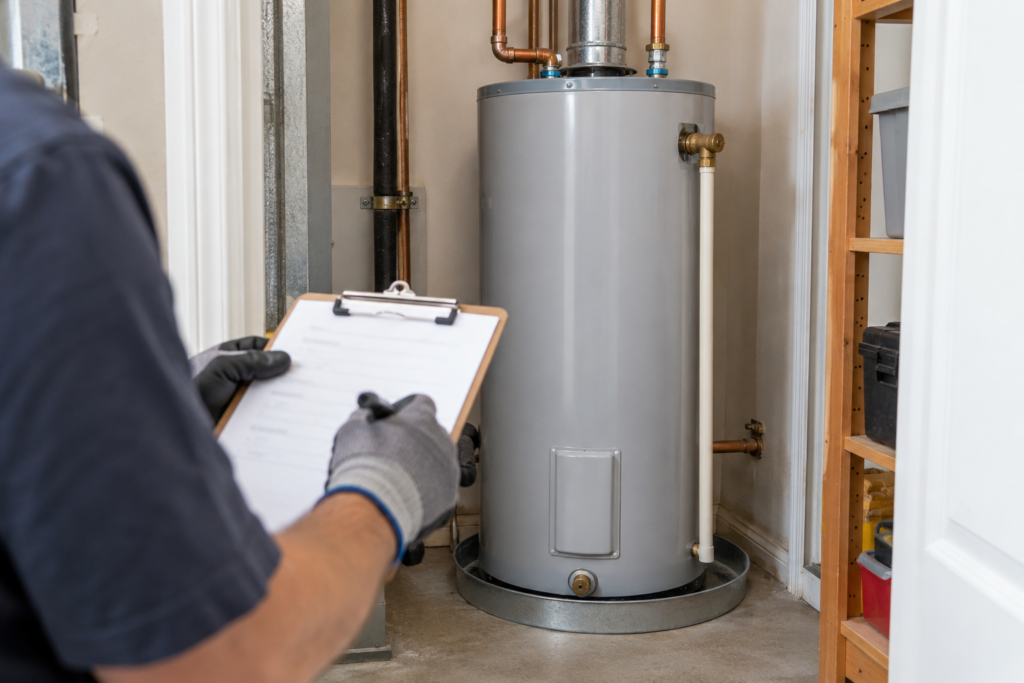


A water heater replacement quote should identify the proposed heater and the work needed to install it at your home. Equipment, connections, access, disposal, required coordination, and startup checks can all affect what you are buying. Two totals may describe different jobs even when both say water heater replacement.
Before choosing a proposal, ask which items are included and which would be additional. You do not need to specify the installation yourself. You do need enough detail to understand why the equipment fits your household and what the contractor plans to change.
Identify the Equipment Being Proposed
Ask for the manufacturer and model, heater type, fuel or power source, and the capacity information used for the recommendation. A description such as standard water heater leaves too much uncertainty when comparing proposals.
Explain your actual hot-water use: the number of people, fixtures used together, and any recent shortage of hot water. The new equipment should be selected for that demand and the installation conditions, rather than copied from the old unit without review.
If different models are proposed, ask each plumber to explain the reason. Features, physical size, connection requirements, and service access may differ. Avoid deciding from an advertised equipment rating alone.
Separate Replacement From a System Conversion
Replacing a similar storage heater is a different scope from moving the heater or converting to tankless. A conversion can involve different installation requirements that should be evaluated and explained before a price is accepted.
For an upgrade discussion, Abundant Plumbing offers tankless water heater service in Austin. Ask how the proposed unit fits simultaneous demand and what changes to the existing installation would be required.
Ask Which Installation Items Are Included
A useful quote addresses the installation at your particular home. Ask the plumber to clarify these items when they apply:
- The exact heater model and any accessories included with it.
- Changes to water connections, shutoff valves, or nearby piping.
- Any fuel, electrical, or venting work needed for the proposed equipment.
- The drain pan, relief-valve discharge route, and other installation details.
- How the heater will be supported and accessed for future service.
- Removal and disposal of the old heater.
- The checks performed before the new heater is placed in normal service.
Not every project needs every change. The purpose is to have the contractor identify the applicable work, rather than assume that all existing parts can be reused or that every accessory is included.
If an estimate lists a recommended change separately, ask whether it is essential for this installation or an optional choice. Have that distinction recorded before approving the work.
Clarify Work Outside the Plumbing Proposal
Another trade may be involved when equipment requires different power, fuel, venting, or access arrangements. Ask who coordinates that work and whether its cost and timing are part of the accepted proposal.
Do not assume that a short line about installing the heater includes repairing walls, relocating stored items, or modifying the utility space. Ask which preparation and finish work the homeowner must arrange.
Where permits or inspections apply, have the proposal state who handles the coordination and any listed fees. Requirements depend on the installation and local authority; the contractor should explain the process for your address.
Describe the Existing Installation Clearly
Information about the current setup helps a plumber assess the work. Bring available records and describe details such as:
- Whether the existing heater is a storage tank or a tankless unit.
- Its location, including an attic, closet, garage, or other utility space.
- The heater model and age, if documented and safely visible.
- Whether normal household use has produced enough hot water.
- Known leaks, service issues, or changes in performance.
- Any access limitations, stairs, narrow openings, or stored belongings.
- Prior maintenance and repair records that may affect the assessment.
Photographs taken safely from outside the equipment can be helpful. Do not remove covers, move venting, disconnect piping, or operate unfamiliar valves to prepare an estimate.
Abundant Plumbing provides water heater repair and replacement in Austin. Ask whether the findings support replacement and how the proposed installation addresses your current needs.
Compare Access and Removal Plans
A heater in an easily reached garage presents a different removal task from one in a restricted space. Ask how the old unit will be removed and how the new equipment will be brought in without assuming every route is practical.
Discuss protection for floors, doorways, and nearby belongings. Clarify the work area, homeowner preparation, cleanup, and disposal so that a plumbing completion does not leave an unexpected handling task.
If the proposed heater has different dimensions, ask whether it will fit with the clearances and access the installation requires. A model change should be assessed before equipment is ordered.
Know How the New Installation Will Be Checked
Ask what startup and installation checks are included. The contractor should explain how the work will be checked for the chosen equipment and its actual water, power or fuel, and venting arrangements.
Request the operating and maintenance documents for the specific model. You should know where routine information is kept and whom to call with questions, without being expected to adjust safety components yourself.
If warranty information is part of the proposal, read the written terms. Distinguish manufacturer coverage from any contractor coverage, and ask about registration, maintenance conditions, exclusions, and the service process.
Plan for Changes and Scheduling
Ask when hot water is expected to be unavailable and what must happen before it returns. Scheduling can depend on access, equipment availability, additional work, and any required inspection.
Have the contractor explain how an unexpected condition will be shown to you and how additional work will be priced and approved. A general instruction to fix everything should not replace a defined scope.
When comparing quotes, use the same model information and installation details. A lower or higher total alone does not tell you whether the proposed work is suitable or complete.
Discuss a Clear Replacement Scope in Austin
Bring your hot-water needs, equipment information, and available service history to the evaluation. Ask for a proposal that explains the new equipment, installation work, exclusions, and completion checks in terms you understand.
To discuss water heater replacement in Austin, call Abundant Plumbing at (512) 201-9978. A property-specific assessment can help you compare the actual work before approving a replacement.